




-1.jpg)
Every morning when my alarm goes off at 4:40, there is a brief moment where I look for a reason not to get up.
Maybe I did not sleep well. Maybe it is cold. Maybe the day ahead already feels full. There is always something that could justify skipping.
And every morning, the same decision presents itself. Not whether I feel like going, but whether I am the kind of person who goes anyway.
Because the truth is simple and a little inconvenient. The people who see results are not the ones who show up when everything lines up perfectly. They are the ones who show up when it does not.
Consistency, even when it is imperfect, beats intensity that comes and goes.
That same pattern shows up in franchise operations more than most people realize.
Most operators are not struggling because they lack knowledge. They are not missing some hidden tactic or strategy. What breaks down, over and over again, is consistency.
Not because they do not care, but because conditions are never perfect.
There is always a staffing issue. A busy day. A manager who is overwhelmed. A week where something else takes priority. And so the systems that are supposed to drive the business forward get applied unevenly, or not at all.
Over time, that inconsistency becomes expensive.
Most franchise operators do not have a knowledge problem. They have a consistency problem.
By the time someone owns multiple units, or is even thinking about it, they already know what a good store looks like. They understand labor targets. They know what a strong guest experience feels like. They have seen what a well-run shift can produce.
And yet, across their stores, the results are rarely consistent.
One location runs clean, hits its numbers, and feels under control. Another struggles with staffing, misses labor, and always seems to be reacting. Same brand. Same playbook. Completely different outcomes.
That gap is where profit quietly disappears.
What most operators are actually managing is not a portfolio of stores. They are managing a collection of individual personalities, habits, and interpretations of what “good” looks like. Each manager runs their store slightly differently. Each shift has its own rhythm. Each team develops its own standards, whether intentional or not.
Over time, those small differences compound into meaningful financial variance.
The shift that has to happen at this stage is simple to say, but harder to execute. You have to move from managing stores to managing systems.
A store can perform well because of a strong manager. A system performs well regardless of who is running the shift.
That distinction matters more than most people realize.
When you are managing stores, you are constantly reacting. You step in when numbers dip. You have conversations after something goes wrong. You rely on your best people to carry more than their share of the weight.
When you are managing systems, you are creating an environment where the right actions happen by default. Expectations are clear. Targets are visible. Performance is measured in a way that leaves very little room for interpretation.
Consistency becomes the output.
This is where most operators get stuck, because they assume consistency requires more oversight or more time. In reality, it requires better visibility and tighter feedback loops.
You do not need to wait for a weekly report to know that something is off in a store.
You can see it in the middle of the day.
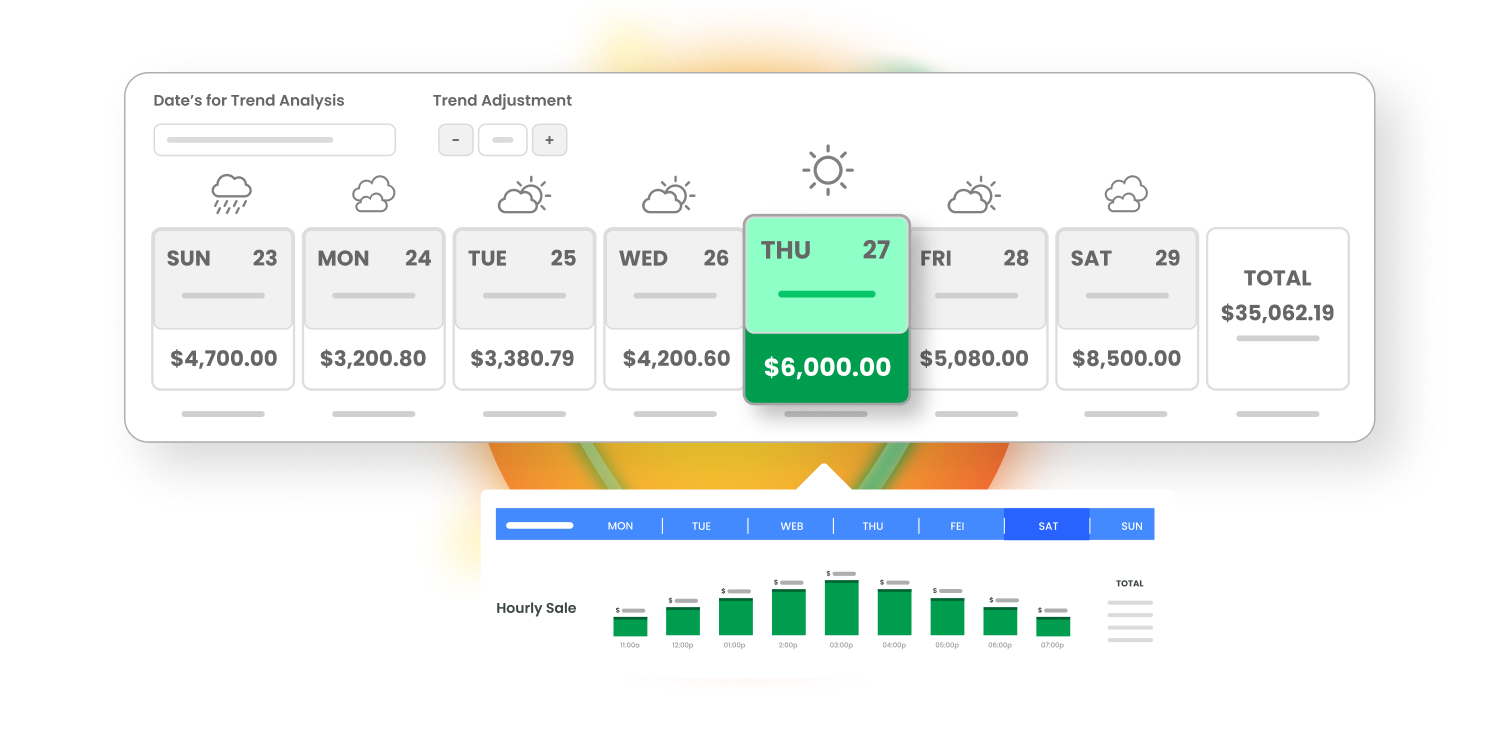
A labor percentage that is drifting higher than it should for the current sales volume. A schedule that does not match the actual flow of the business. A shift where one position is overwhelmed while another is standing idle. These are not end-of-week discoveries. They are real-time signals.
The operators who protect their margins are the ones who learn how to spot these signals early and respond quickly.
That is why your weekly review process matters, but it is only part of the equation. The goal of a weekly review is not just to look backward. It is to train your eye for what to look for in the moment.
When you review Sales Per Labor Hour, you are not just checking a number. You are reinforcing what “right” looks like so that when it starts to drift during a shift, it stands out immediately.
When you look at labor percentage, you are not just holding a manager accountable after the fact. You are helping them understand how their decisions throughout the day shape that outcome.
Over time, this builds a different kind of operator. One who does not rely on reports to tell them how they did, but who can feel when a shift is off track and correct it before it becomes expensive.
That is the foundation of consistency.
And consistency is what unlocks scale.
Because the moment you decide to grow, inconsistency becomes a multiplier. Every inefficiency, every unclear expectation, every reactive habit gets replicated across more stores. What was once manageable becomes chaotic very quickly.
On the other hand, when your systems are tight and your standards are clear, growth becomes far more predictable. New stores are not starting from scratch. They are stepping into an operating model that already works.
This is also where your role begins to change.
If you are still solving the same operational problems in multiple locations, you are still managing stores. If your focus shifts toward refining how the business runs, what gets measured, and how quickly issues are identified and corrected, you are managing a system.
That is a very different job, and it is the one that creates real leverage.
The operators who make this shift are not necessarily working more. They are just working at a different level. They are less involved in individual outcomes and more focused on the structure that produces those outcomes.
They build businesses where performance is not dependent on constant intervention.
They build businesses that can repeat success.
That is where the next level of profitability comes from.